Our Projects

Dharmalife Labs is tightly integrated into Dharmalife’s iterative design loop for creating and executing programmes. The Lab helps in understanding the challenges, mining human insights, and conceptualising solutions. The Dharmalife team then rigorously prototypes and tests these solutions before executing them at scale. The Lab also plays a crucial role in monitoring, evaluation, and learning for active programmes.

18 projects across cause areas

Leveraging over $5M in funding

Impacting over 1M lives in rural communities

SCROLL FOR FEATURED PROJECTS

Better Skills Better Care with Dharmalife’s Community Learning Centre:

Empowering women with job-ready skills and affordable early childhood education

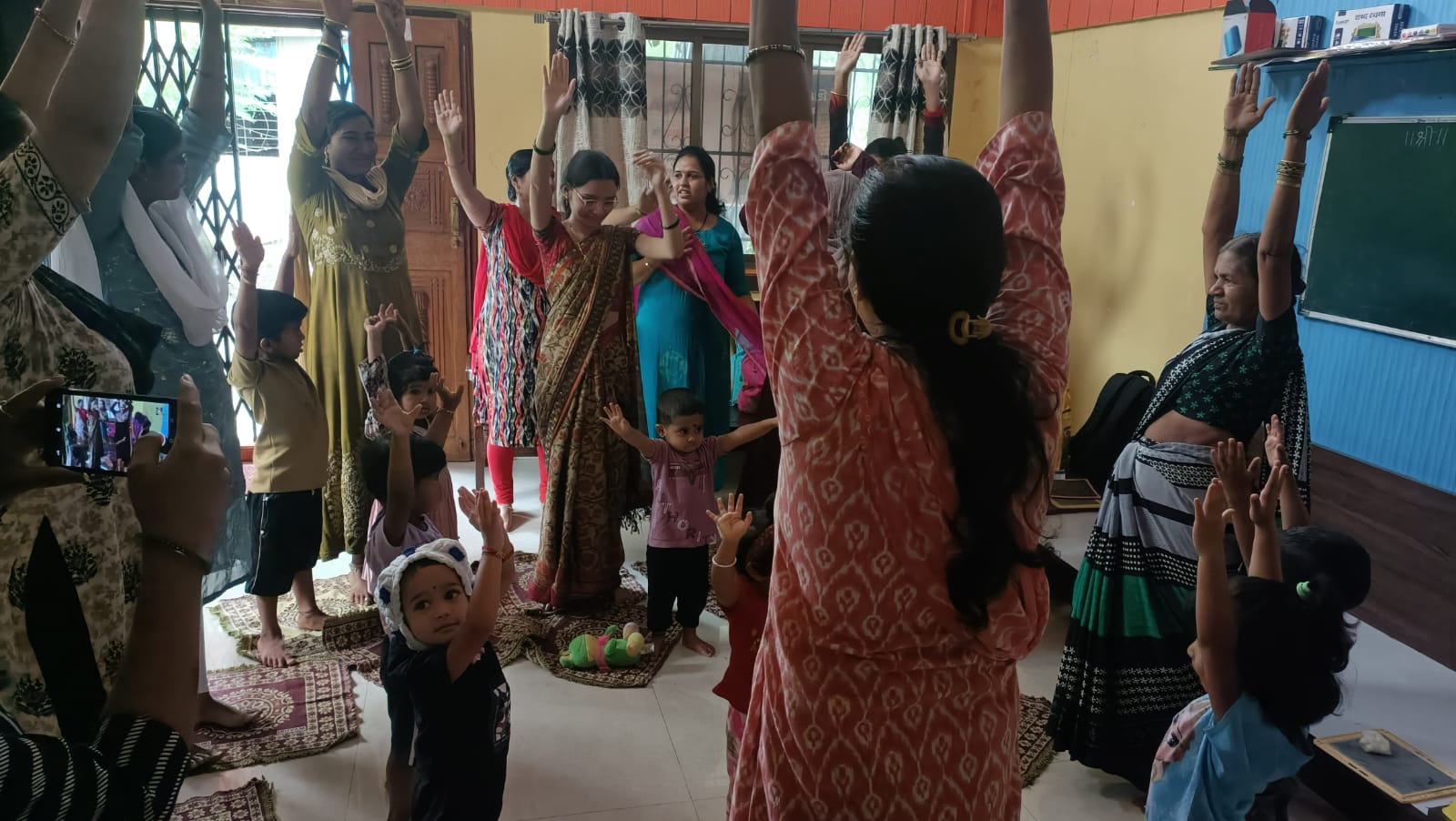
In India, only 24% of women participate in the workforce (World Bank Gender Data Portal, 2022), a figure that reflects the significant challenges women face, such as the burden of unpaid care work and limited access to skill development opportunities. To tackle these barriers and enhance women’s economic participation, Dharmalife Foundation launched Community Learning Centers in Hochar village (Jharkhand), Asoj village (Gujarat), and Nade village (Maharashtra). These centers named as Samaarthya centres aim to empower women from low-income rural and peri-urban communities by offering training, upskilling and livelihoods opportunities in a shared, supportive environment. Simultaneously, they provide accessible, affordable, and quality Early Childhood Care and Education (ECCE) for the women’s children, allowing mothers to pursue their interest and job-ready skills while ensuring their children's developmental needs are met. This holistic approach enables women to improve their employability and increase their economic participation, contributing to community development.
ROLE OF DHARMALIFE LABS

Conducting detailed community outreach activities (Participatory Rural Appraisal, semi-structured interviews) to map the interests and training needs of rural women, ensuring the courses align with their aspirations and market demand. 

Courses tailored to local contexts, equipping women with relevant skills to increase their employability.

Development environment for children aged 2-6, ensuring quality early education while their mothers receive training.

Running pilot implementations to test the effectiveness of the program, gathering feedback to refine and improve the model.

Utilizing the DL ONE ecosystem to collect near-real-time data from pilot villages, tracking the program’s progress and impact.

Conducting ongoing research to assess community needs, market conditions, and the broader socio-economic impact of the program on women’s livelihoods and children's early learning.

Partnering with local stakeholders and using insights from pilot studies to scale the model to more communities, ensuring sustainable long-term impact.
VIEW DATA STORY

Clean & Connected Homes

How creating a model home is driving holistic rural progress

Creating clean and connected homes (that are aware of good health, hygiene, and sanitation habits, have access to clean energy and cooking, and are digitally literate) through a role model home as an inspiration for the community. The programme also tested various marketing methods through a randomised controlled trial.

ROLE OF DHARMALIFE LABS

Dharmalife Entrepreneurs conducted quantitative and qualitative surveys with YY rural women across XX villages to understand the realities and glean insights.

Iteratively designed, tested and finalized the programme activities across cause areas.

Conducted a randomised controlled trial with over 600 participating villages and 40,000 rural households to test the efficacy of push marketing vs pull marketing vs push-pull marketing.

Leveraged the DL ONE ecosystem to gather and analyse the programme's progress across 600 villages in near-real-time.
VIEW DATA STORY

Period of Change

How a board game is keeping young girls in school

Enabling conversations and driving behaviour change on the taboo topic of menstrual hygiene among adolescent girls and their mothers in rural India through a life-size board game, demonstrations, and a pink piggy bank.
ROLE OF DHARMALIFE LABS

Menstrual Hygiene is a taboo topic among rural women and girls, so traditional communication methods failed to get the message across. A life-size game of snakes and ladders was conceptualised to make them more comfortable and bring up the issue in a lighter environment. The game has seen great results as a conversation starter in group discussions at schools and rural homes.

Many rural women and girls use cloth instead of sanitary napkins during their periods. While awareness is the primary issue, there is also a perception that sanitary napkins are expensive. To address this, the “gulabi gullak” was created – a small pink piggy bank pouch in which they were asked to place one rupee a day so they had enough to buy a pack of sanitary napkins at the end of each month.

Leveraged the DL ONE ecosystem to gather and analyse the programme's progress in near real-time.

We for Village

How Whatsapp groups helped fight COVID-19

Responding to the effects of COVID-19 and the resulting lockdown in rural India, this programme transformed Dharmalife’s rural entrepreneur network into a crisis response force to create awareness, dispel myths, enable access to essential goods and medical services, aid recovery, and build resilience. The programme brought together several partners to create a global alliance.

ROLE OF DHARMALIFE LABS

The COVID-19 pandemic and the resulting lockdown led to rural communities facing numerous challenges. While some, like access to essential goods and misinformation, were common, many communities faced challenges that were unique to them. A series of calls and video calls were set up to better understand these realities.

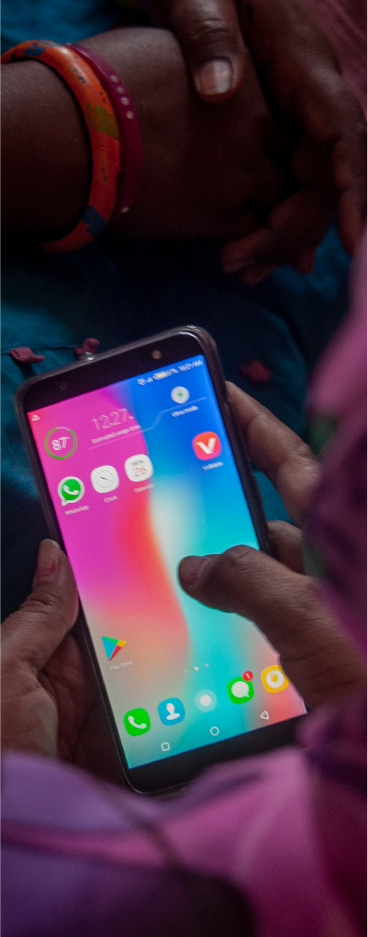
Established a two-way communication channel with Whatsapp Groups created by the Dharmalife Entrepreneur for each community, with additional Whatsapp groups at the district and state level, creating a real-time, hyperlocal communication channel. This allowed for quick and easy dissemination of information while staying informed of the local issues and responses, allowing for adaptable strategies. The Whatsapp Groups became the backbone of all the products and services that were delivered during the pandemic, from essential goods and groceries to doctor consultations and vaccination appointments.

Issues that were identified through the communication channel with Whatsapp Groups were addressed through the co-creation of solutions. Members of Dharmalife Labs worked with local leadership to design, test and scale solutions.
VIEW DATA STORY

The Green Weave

How blended learning is helping dying artforms stay alive

Creating green livelihoods through circular entrepreneurship for rural tailors and artisans through training and mentorship. The programme also aims to help preserve rural art forms by creating awareness and appreciation for handcrafted goods and making the manufacturing processes more sustainable.

ROLE OF DHARMALIFE LABS

The Dharmalife Labs team had conversations and conducted surveys with rural artisans in Madhubani, Jaipur, Lucknow and Varanasi to understand the realities, challenges and barriers to they face.

Detailed immersions with artisan clusters across four artforms (Madhubani Painting, Banarasi Weaving, Block Printing and Chikankari Embroidery) to understand the manufacturing processes thoroughly and identify potential areas for intervention to improve sustainability.

The Cradle-to-Cradle Framework was leveraged as a foundation to create the Green Weave artisan model. This was the basis for designing numerous changes to the manufacturing process of the art forms to make them more sustainable. This included using natural and recycled fabrics and dyes, creating zero-waste patterns for tailoring, upcycling and recycling textile waste, and creating better working conditions. This also included designing innovative solutions like a filter to reduce water pollution in the Chikankari process and preserving Block Printing motifs through 3D Scanning.

After an extensive mapping exercise of the manufacturing process, Dharmalife Labs partnered with KPMG to quantify the impact of each step of the manufacturing process in a sustainability index. The index aims at bringing about a positive change in the textile industry and encompasses key parameters such as greenhouse gas emissions (GHG), water footprint, and waste footprint to evaluate the environmental performance of textile companies.

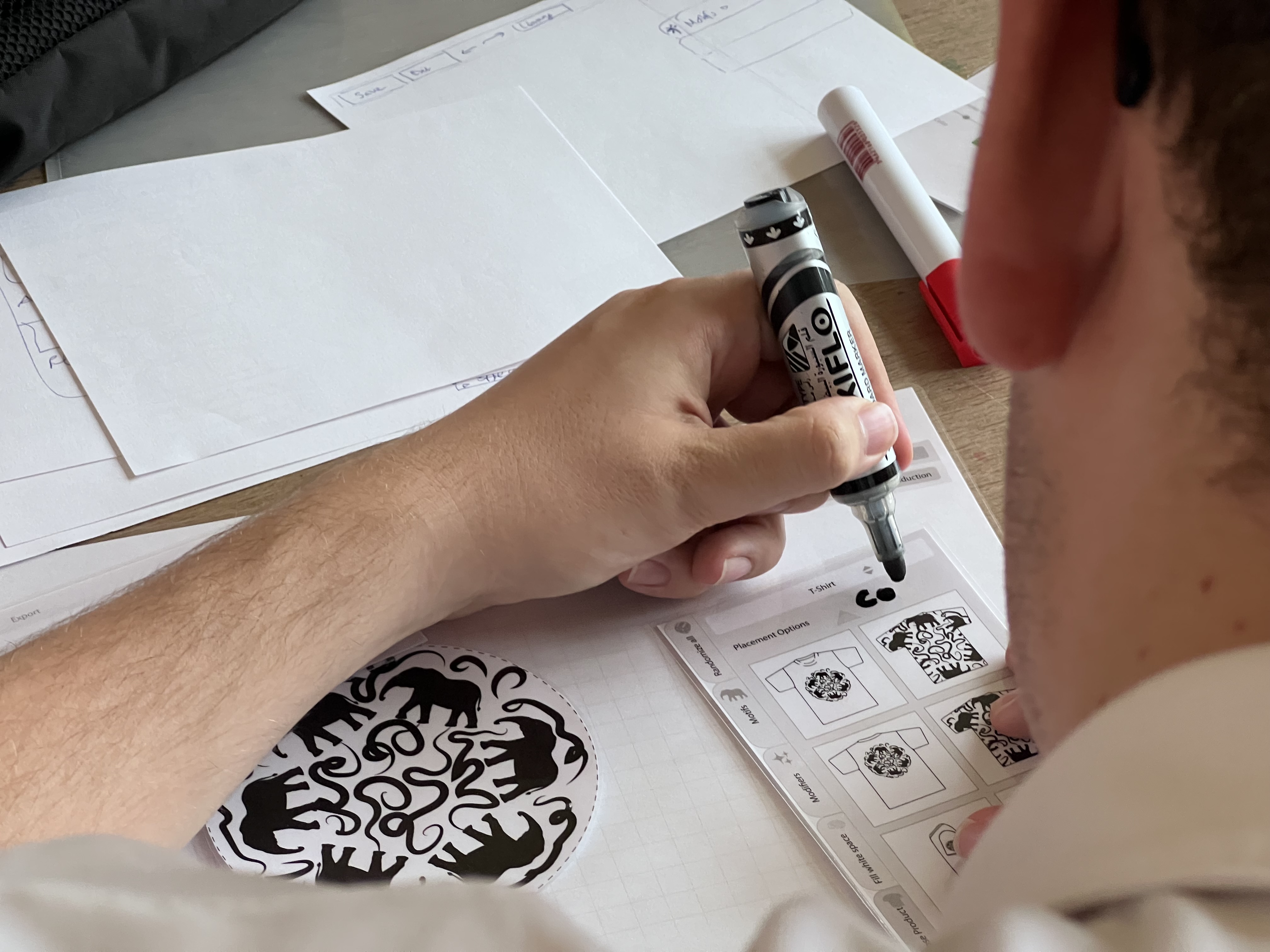
One key insights that emerged from the immersions was that one of the biggest barriers to rural artisans starting their own businesses is their lack of knowledge of design. To address this, Dharmalife Labs has created a tool that uses Generative AI to create unique designs for products from an extensive library of traditional motifs.